The concept of masculinity — the set of qualities, behaviours, and roles understood to define what it means to be a man — has never been fixed. Across recorded history and across cultures, definitions of masculinity have varied considerably in their content, their internal hierarchies, and the social mechanisms through which they were enforced and transmitted. What a particular society expects of its men, and how it rewards or penalises deviation from those expectations, tells us a great deal about that society’s broader organisation of power, labour, family, and meaning.
This article traces the broad contours of how masculinity has been conceived across different periods and cultural contexts, with particular attention to the Javanese and broader Indonesian traditions that form the immediate cultural background for readers of this resource, as well as the major Western historical shifts that have shaped global discourse on the subject.
Ancient and Classical Traditions
In ancient Mediterranean civilisations, masculine ideals were typically expressed through two interrelated frameworks: martial prowess and civic virtue. In ancient Greece, the concept of arete — excellence or virtue — was initially applied primarily to martial capability and physical courage, though it later expanded in philosophical contexts to encompass intellectual, moral, and civic qualities. The warrior, the orator, and the statesman represented overlapping masculine archetypes in different phases of Greek social life.
Roman masculinity was organised around the concept of virtus — a term directly derived from vir, meaning man — which encompassed courage, discipline, loyalty, and the capacity to exercise authority responsibly. The Roman ideal of the pater familias — the male head of household — carried legal as well as social authority, representing a model of masculine identity in which power was exercised within the domestic sphere as well as the public one.
In East Asian classical traditions, Confucian frameworks organised masculine identity around relational roles rather than individual qualities. A man was defined by his proper fulfilment of the five key relationships — ruler-subject, parent-child, husband-wife, elder-younger brother, friend-friend — and by the cultivation of virtue within those relationships. Authority and deference were both masculine virtues; the ideal man both led and submitted to appropriate authority.
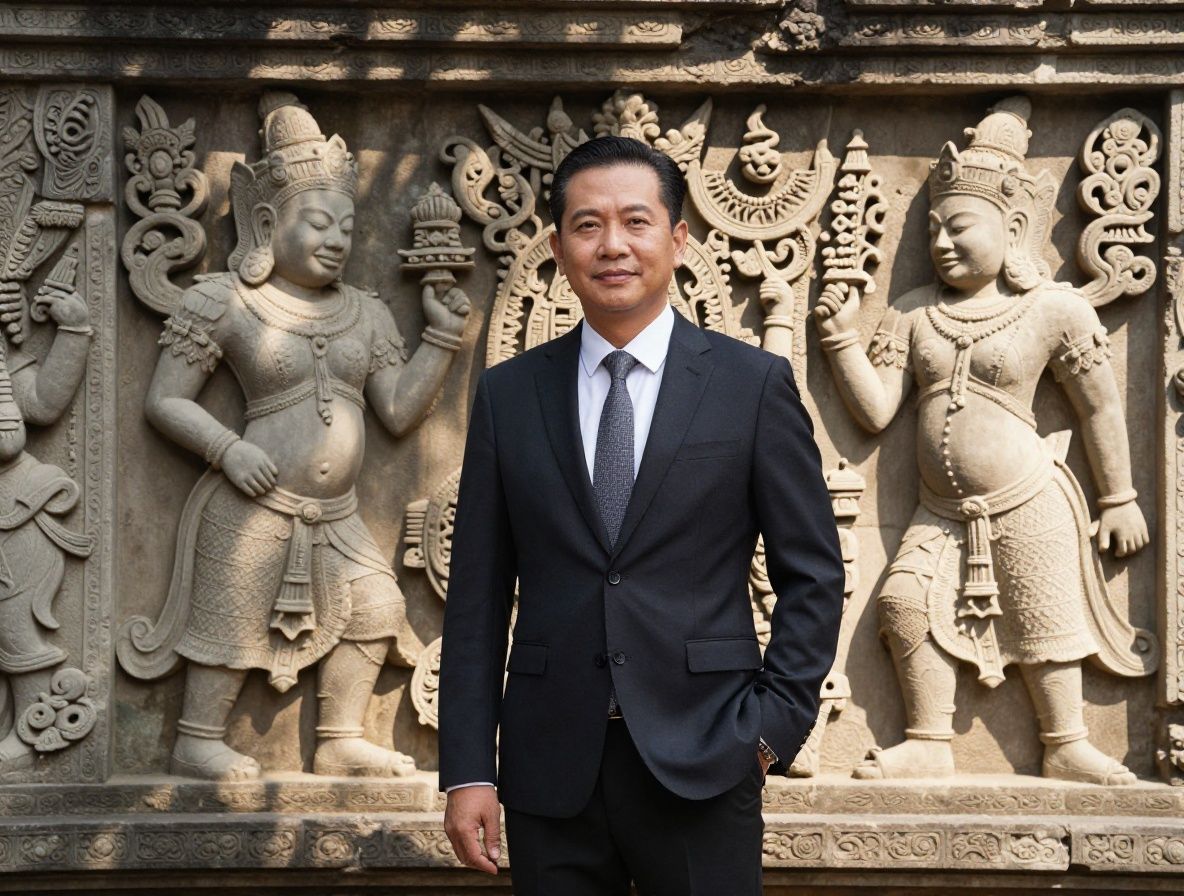
Masculinity in the Javanese Tradition
The Javanese cultural tradition — the most numerically dominant cultural tradition in Indonesia — offers one of the most elaborated and internally coherent systems for conceptualising masculine virtue in the region. Central to this system is the concept of priyayi masculinity: the ideal of the refined, spiritually cultivated, emotionally restrained man of the Javanese aristocratic and administrative class.
The ideal Javanese man in this tradition is characterised by alus — refinement, smoothness, calm, and the disciplined control of emotional and physical expression. Alus is contrasted with kasar — coarseness, roughness, undisciplined emotion. The capacity to remain composed, to speak and act with measured restraint, and to cultivate inner spiritual depth is understood in this framework as the highest expression of masculine development.
Alongside the alus/kasar distinction, Javanese culture has maintained the figure of the ksatria — the warrior-noble, drawn from the Hindu epics Ramayana and Mahabharata — as a masculine archetype combining physical courage with inner virtue. The wayang kulit (shadow puppet) tradition represents and transmits these archetypes through performance, with figures such as Arjuna embodying the integration of martial skill, spiritual depth, and refined character.
“In the Javanese framework, the most complete masculine ideal is not the aggressive, dominating warrior but the person who has cultivated enough inner discipline to express power through restraint rather than through force.”
Cultural Comparison Matrix
| Culture / Period | Primary Masculine Ideal | Key Virtues | Primary Social Role |
|---|---|---|---|
| Ancient Greece (Classical Period) | Warrior-Citizen | Courage, rhetoric, civic participation | Military service, civic governance, philosophical discourse |
| Imperial Rome | Pater Familias / Soldier-Citizen | Virtus, discipline, loyalty, authority | Military service, civic administration, domestic governance |
| Confucian East Asia | Gentleman-Scholar | Relational virtue, learning, propriety, loyalty | Scholar-official, filial son, attentive husband |
| European Medieval Period | Christian Knight | Chivalry, piety, martial honour, protection | Military service, religious duty, lordly governance |
| Javanese Classical Tradition | Ksatria / Priyayi | Alus (refinement), spiritual depth, restraint | Warrior-noble, administrative official, spiritual exemplar |
| Industrial-era Europe (19th c.) | Self-made Breadwinner | Industriousness, self-discipline, respectability | Productive labourer, provider, rational agent |
| Post-war West (mid-20th c.) | Provider-Father | Stability, stoicism, responsibility, leadership | Economic provider, family head, national citizen |
| Contemporary Global | Plural / contested | Multiple, contradictory, culturally variable | Multiple, negotiated individually and contextually |
The Industrial Era and the Breadwinner Model
The industrial revolution in Western Europe and North America produced a significant reorganisation of masculine identity around the concept of paid labour and economic provision. As production shifted from the household and smallholding to the factory and urban workplace, a clear gender division of economic roles emerged and solidified: men as wage-earners in the public sphere, women as domestic caretakers in the private sphere.
The “breadwinner” model of masculinity — organised around a man’s capacity to earn a sufficient wage to support his family — became the dominant cultural ideal in industrialised societies by the late nineteenth century and remained so through much of the twentieth. This model tied masculine identity closely to employment, economic provision, and the social respectability that accompanied stable employment in an era of expanding industrial and bureaucratic labour markets.
Academic Frameworks: How Masculinity Has Been Studied
The academic study of masculinity as a distinct field developed primarily in the 1970s and 1980s, drawing on feminist theory, sociology, and psychoanalytic frameworks. Several theoretical approaches have been influential in shaping how masculinity is now discussed in scholarly and popular contexts.
- Role theory — an early approach that understood masculinity as a socially defined set of expectations and behaviours, transmitted through socialisation. This framework has been criticised for treating gender roles as static and for failing to explain variation and conflict within gender categories.
- Hegemonic masculinity — a concept developed by the sociologist R.W. Connell in the 1980s and widely influential since. The theory proposes that in any given society, there is a dominant configuration of masculine practice — “hegemonic” masculinity — that is legitimated by and in turn legitimates existing social structures. Other forms of masculinity are subordinated, marginalised, or complicit with this dominant form.
- Intersectionality — an approach developed primarily by feminist legal scholar Kimberlé Crenshaw and applied widely since, which examines how categories such as race, class, ethnicity, religion, and sexuality intersect with gender to produce particular configurations of experience and power. Intersectional approaches have been important in complicating overly uniform accounts of “masculinity” that implicitly represent a particular demographic.
- Poststructuralist approaches — drawing on theorists such as Michel Foucault and Judith Butler, these frameworks understand gender as performative and historically contingent rather than fixed or natural. Masculinity, in this view, is not a property of individuals but a set of practices reproduced through repeated social performance within particular discursive contexts.
Trajectories in the Contemporary Period
Contemporary discourse on masculinity is characterised by its plurality and contestation. The singular, hegemonic ideal of mid-twentieth-century masculinity has fragmented — under pressure from feminist critique, changing labour markets, the diversification of family structures, and the global circulation of competing cultural models — into a landscape of multiple, sometimes incompatible propositions about what men are and should be.
In Indonesia specifically, this contestation is particularly visible. Global influences — transmitted through media, education, and digital platforms — encounter established Islamic frameworks for gender roles, Javanese and other regional traditions of masculine ideals, and the specific pressures of a rapidly changing economy and urbanising society. The result is a cultural conversation about masculinity that is active, unresolved, and genuinely significant for the lives of millions of people.
Understanding the historical depth and cultural range of these conversations — rather than treating contemporary debates as unprecedented or as deviations from a stable norm — is one of the primary contributions that a historically informed perspective can make to how these questions are engaged.